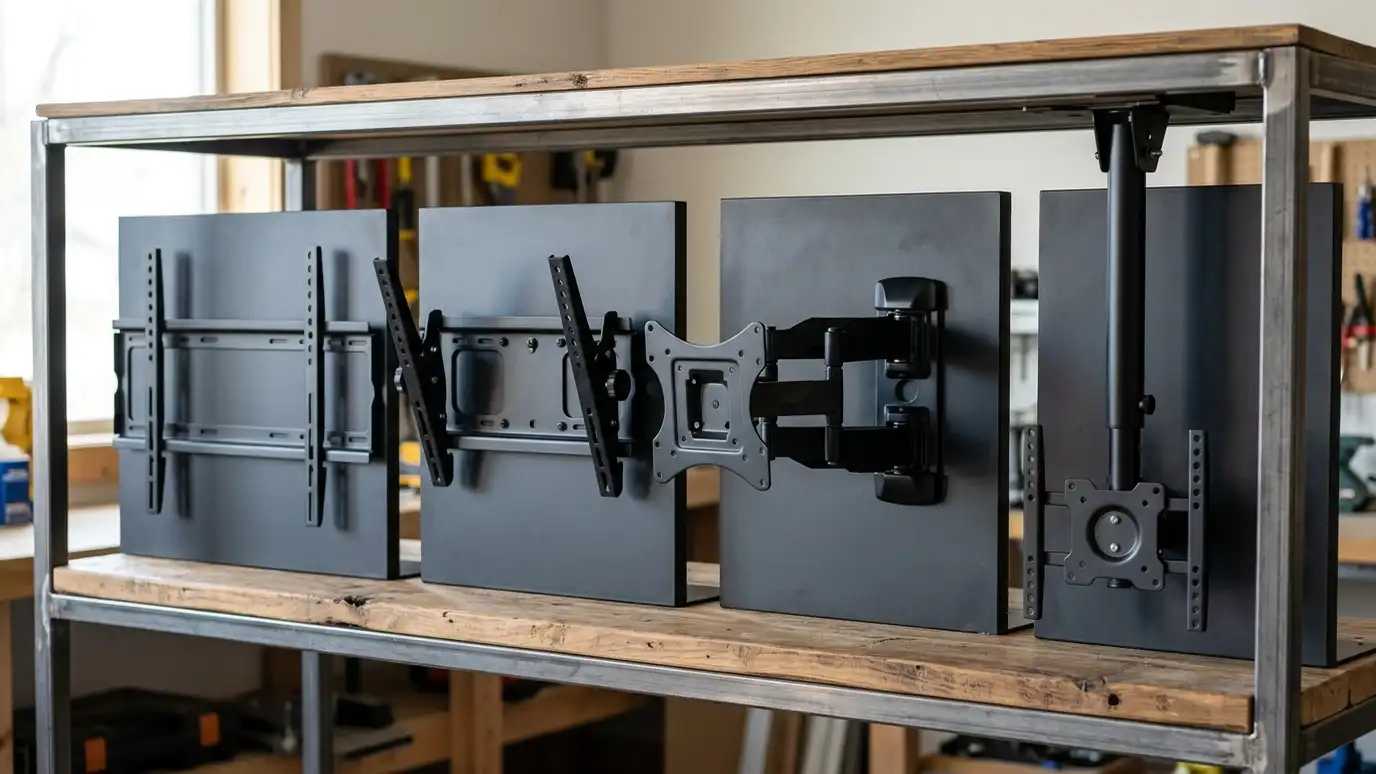
Fixed, tilting, full-motion, ceiling and pull-down TV mounts compared for looks, viewing angle and installation.
A TV mount does more than hold the screen. A fixed mount keeps the TV close to the wall for the cleanest look. A tilting mount lets you angle the screen down, which helps when the TV sits above eye level. A full-motion mount swings and extends so you can turn the TV toward different seats. Ceiling mounts suit rooms without a good wall, and pull-down mounts bring a high TV, such as one above a fireplace, down to eye level.
The right mount depends on the wall, the height and how you watch. A fixed mount suits a TV at eye level in a main seat, a tilting mount helps with a higher TV and a full-motion mount works in corners or open rooms. In Nashville homes with fireplaces and open layouts, we often recommend tilting or pull-down mounts. We check the wall, the weight and your seating before we choose.
Closest to the wall. Simple and clean.
Angles the screen down for a high TV.
Swings and extends for different seats.
Hangs the TV in rooms without wall space.
Brings a high TV down to eye level.
Mounts are rated for specific TVs.
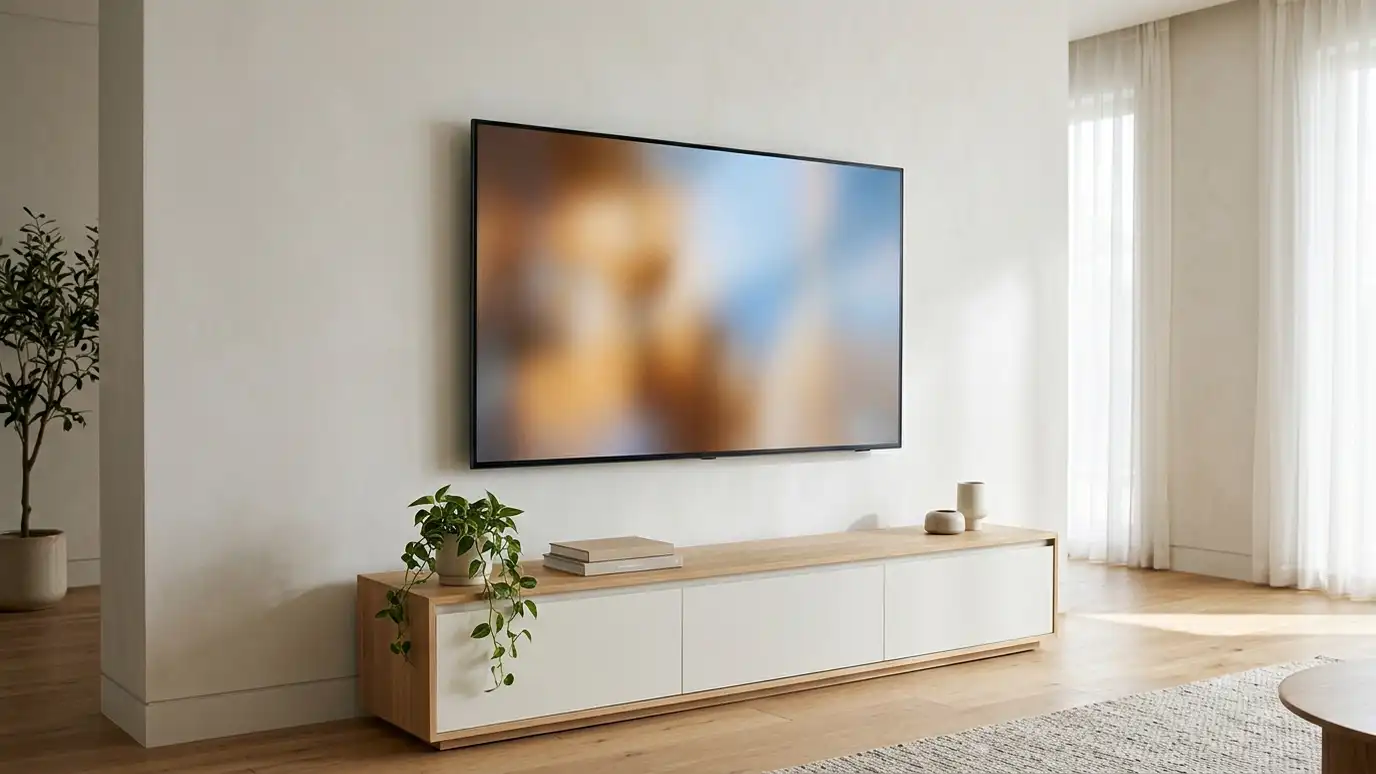 TV Mounting InstallationTVs mounted securely at the right height and angle on drywall, brick, stone or masonry, with cables tidied.Explore
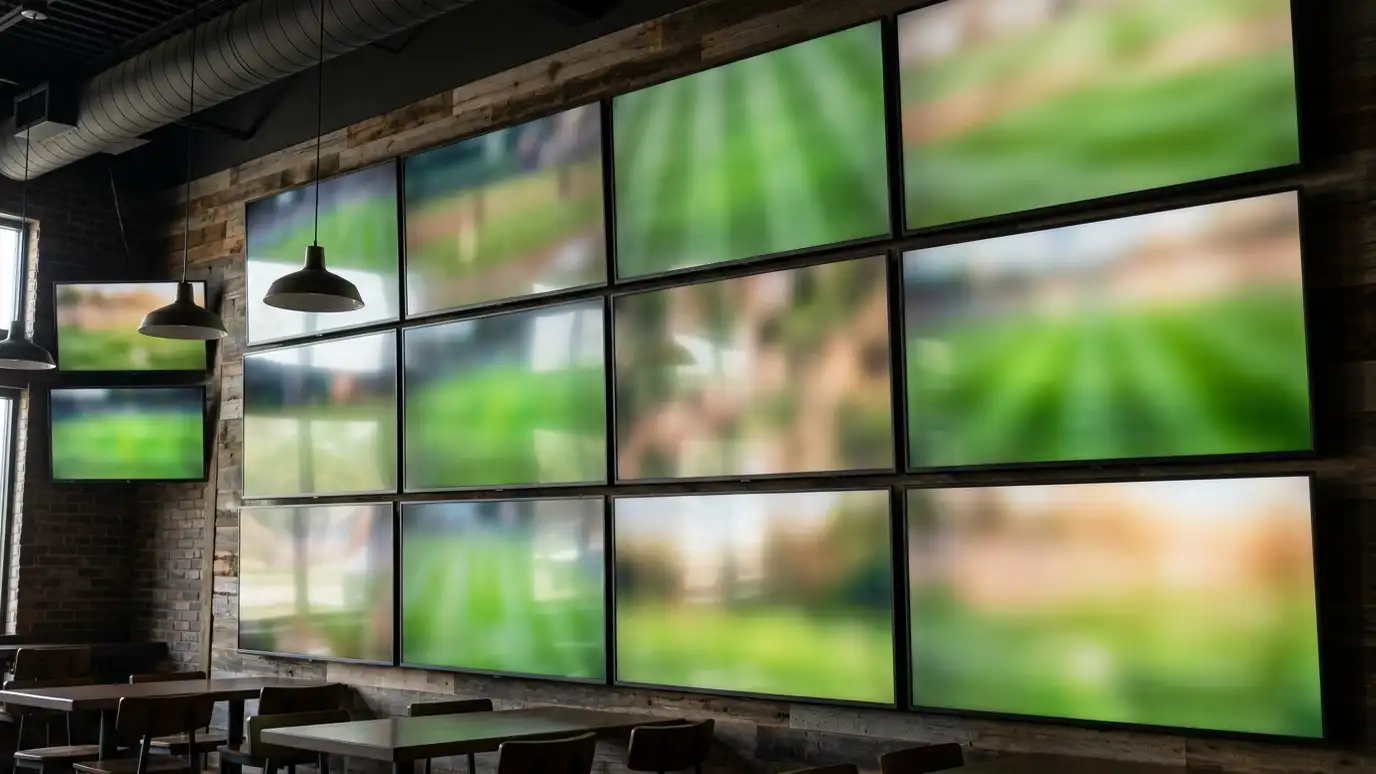 Multi-TV and Video Wall InstallationSeveral TVs aligned, wired and synced for sports rooms, bars, lobbies and large media walls.Explore
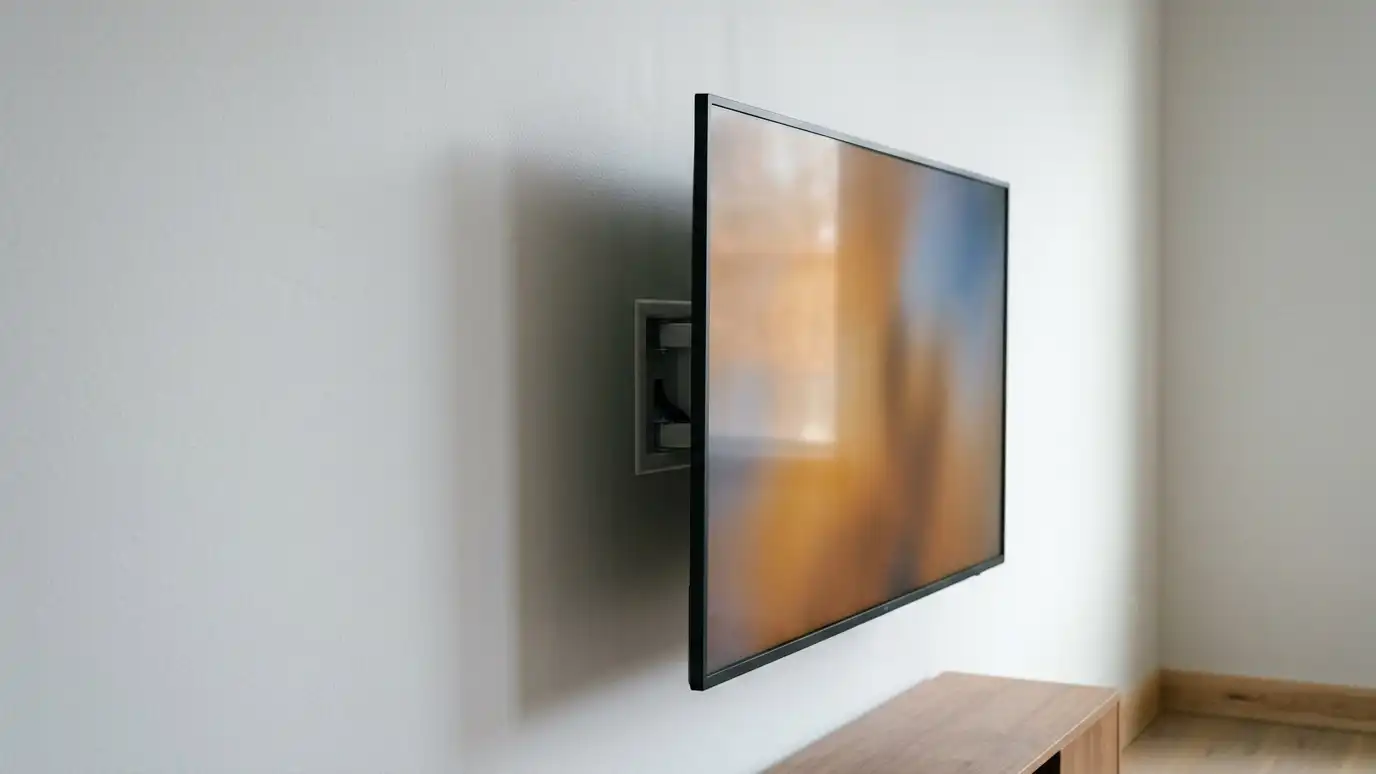 TV Wire Hiding and ConcealmentCables hidden in the wall or tidy raceways, with outlets and plates that look factory-made.Explore
 AV System Design ConsultationDesign help for theaters, whole-home audio and smart homes, with layouts, equipment lists and wiring plans.Explore
 AV Maintenance and Support PlansScheduled visits, updates and priority support that keep home AV systems running smoothly.Explore
Check problems, pick a system or ballpark a budget.
 AV Problem Checker: What Is Wrong?Pick what you see or hear to get likely causes, what to try first and the service page that fits.Try it
 Home Theater System PickerAnswer a few questions about your room, light and habits to see which kind of system usually fits best.Try it
 AV Installation Budget PlannerPick a job, set the quantity and add extras to see a ballpark planning range for your audio video project.Try it
A tilting mount is a good all-around choice for a TV a little above eye level. A fixed mount is great at eye level.
No. Mounts are rated for size and weight, and the wall has to support it. We check both.
They are safe when installed properly into studs or masonry. They also extend the load, so correct anchoring matters more.
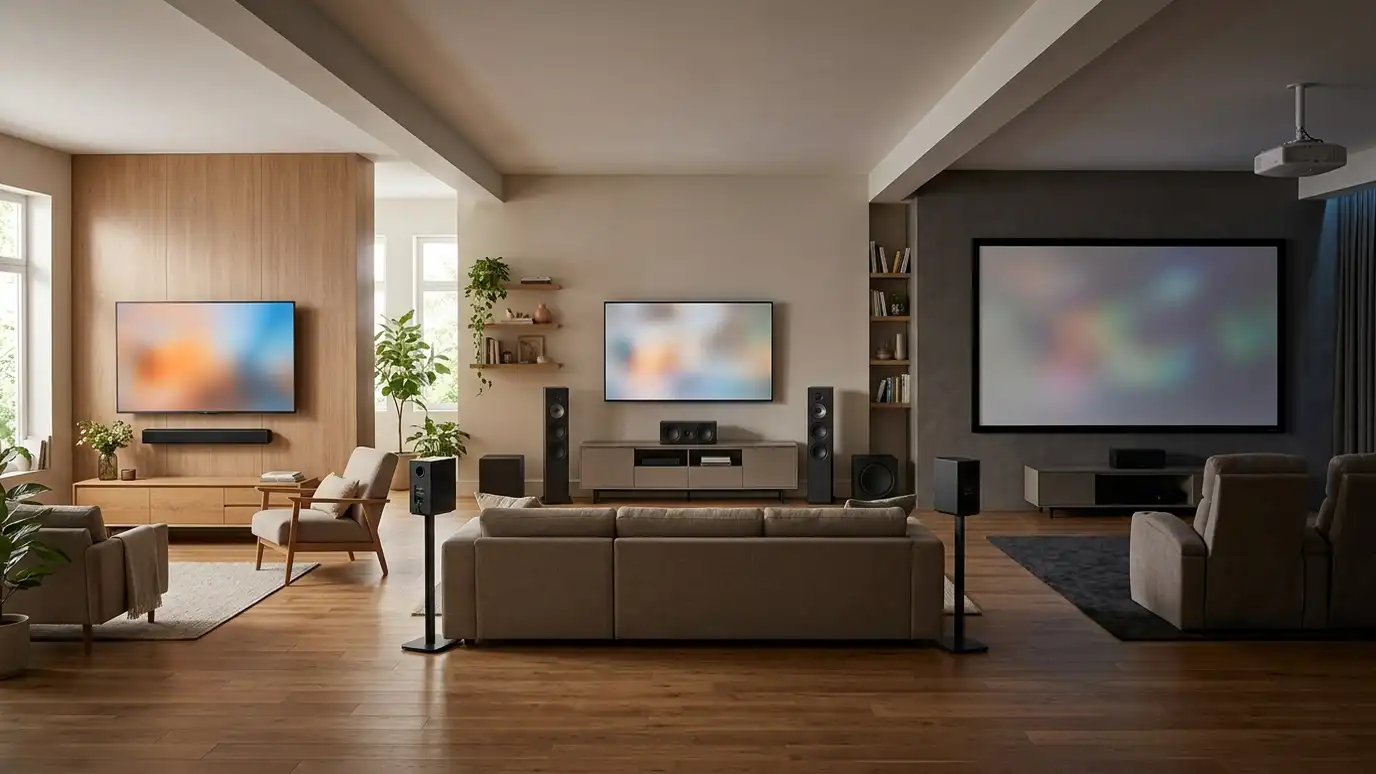 Topic guideSystem TypesSoundbar setups, surround sound systems, projector theaters and dedicated rooms compared for sound, picture, space and effort.Learn more
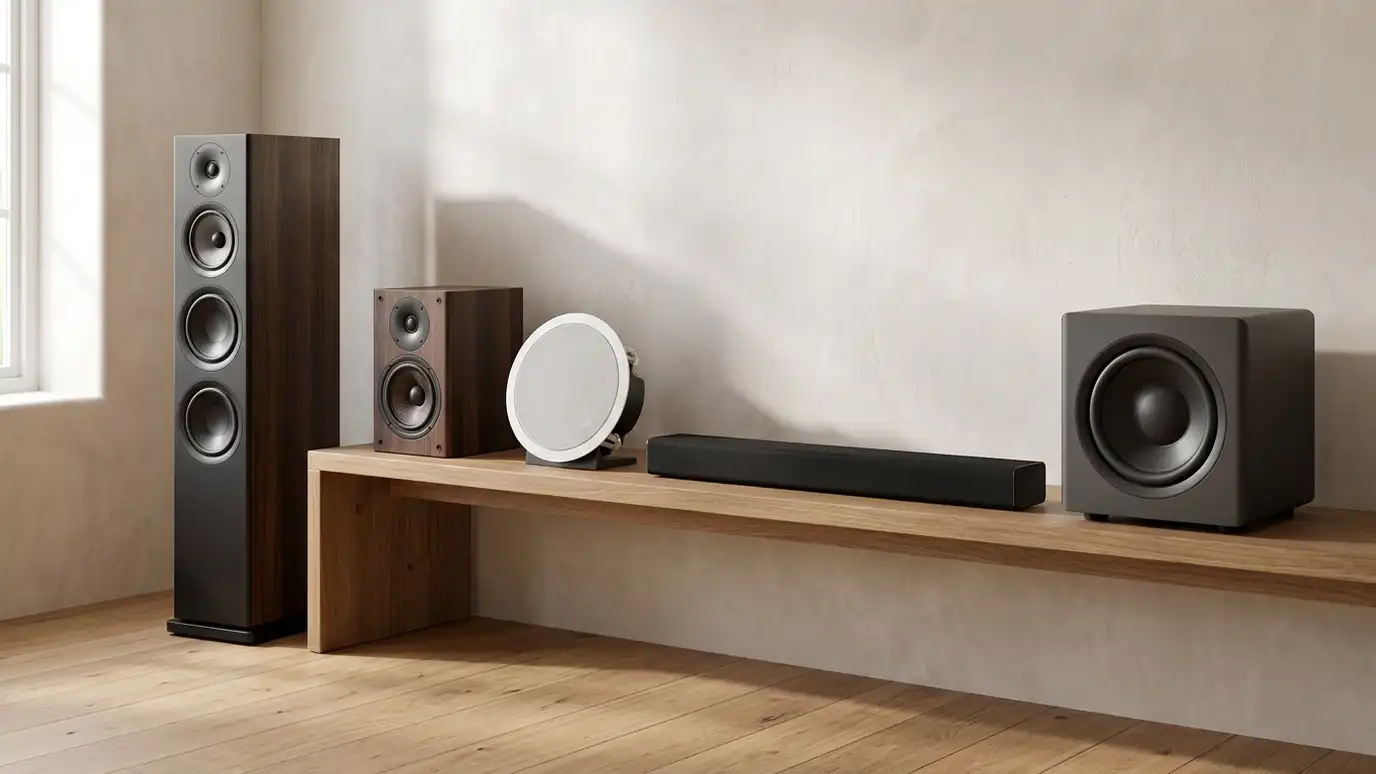 Topic guideSpeaker TypesFloor-standing, bookshelf, in-wall, in-ceiling, soundbar, outdoor and wireless speakers compared for sound, looks and installation.Learn more
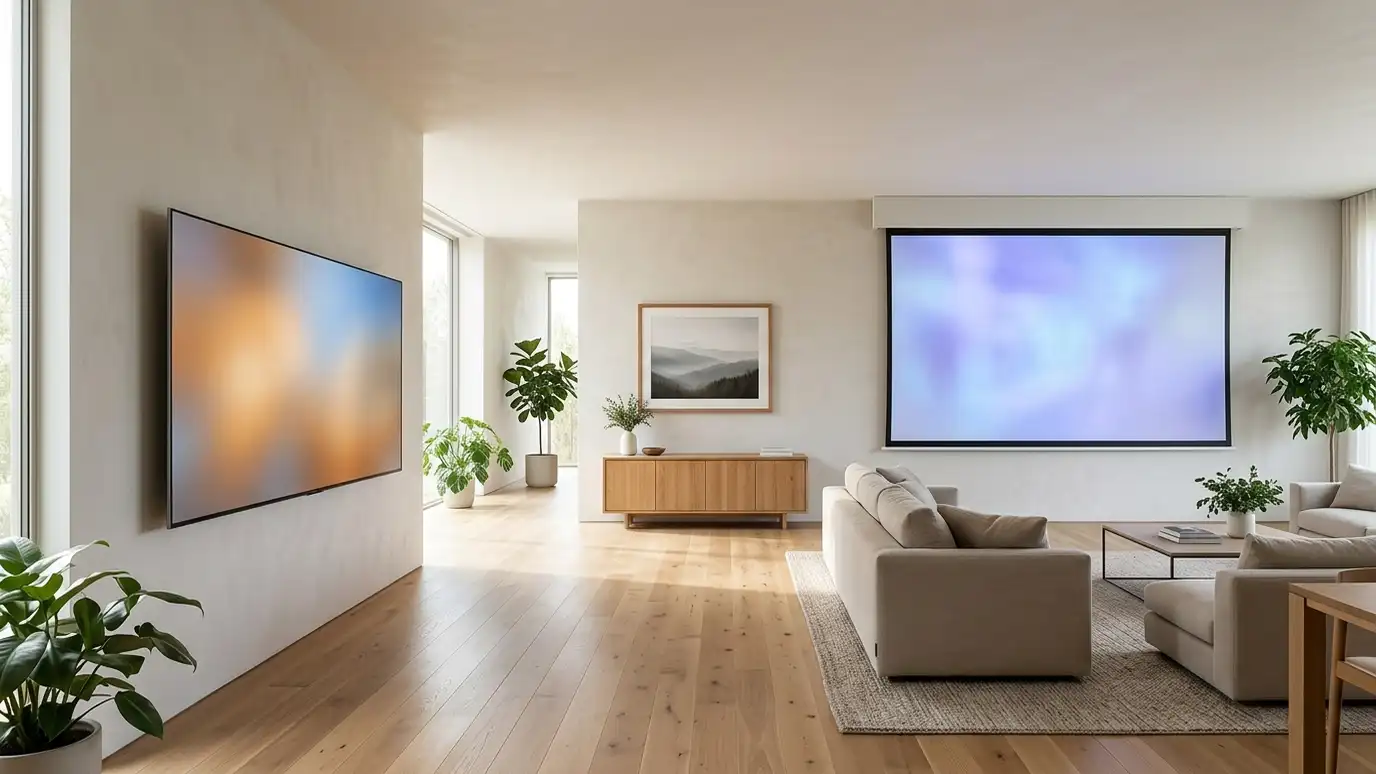 Topic guideTV vs ProjectorLarge TVs and projector systems compared for size, brightness, room light, installation and everyday use.Learn more
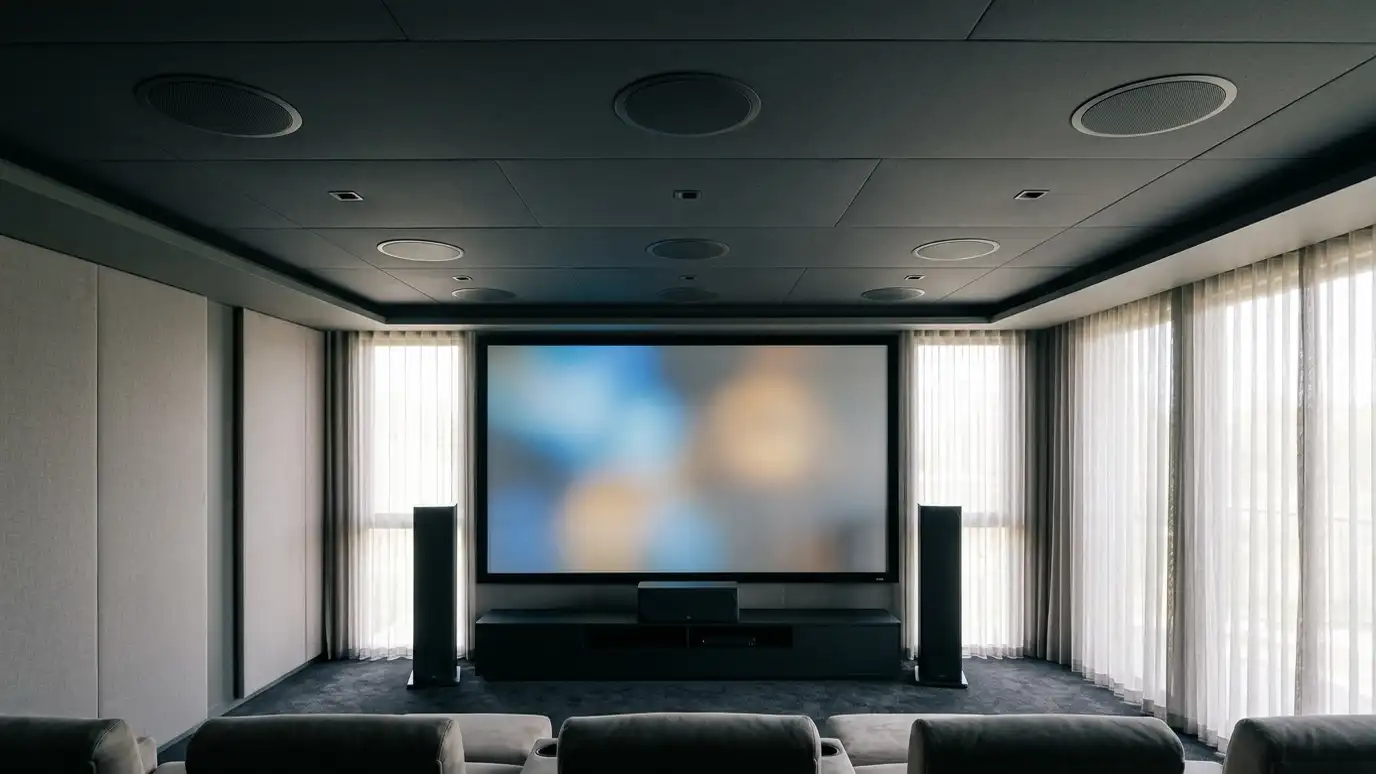 Topic guideSurround FormatsStereo, 5.1, 7.1 and immersive formats with overhead speakers compared for sound, room needs and speaker count.Learn more
Call us and describe your project. We will look at your space, talk through equipment and give you a clear written estimate.