Why there is no single price
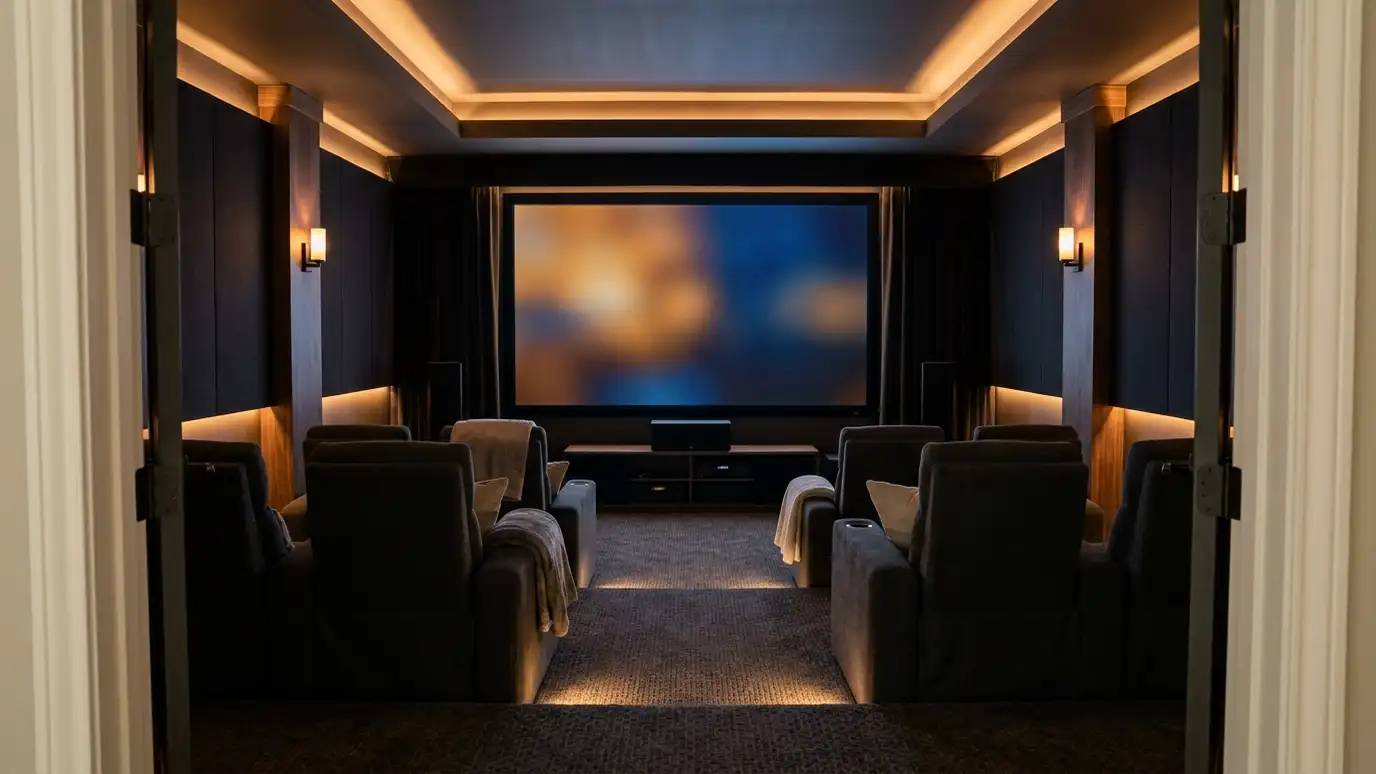
Two living rooms with the same size TV can cost very different amounts to equip, because the wiring, the speakers, the control and the finish are different. A TV on a wall with a soundbar is a quick job. A theater with hidden speakers, new wiring, acoustic panels and lighting scenes is a very different one. Prices you see online are averages across very different projects, which is why they rarely match your own.
The more useful question is what the job actually involves. Once a company has seen your room and talked through your goals, every company can price the same scope, and you can see where the money goes.
Before anyone gives you a number, write down the rooms, the equipment you already own, the look you want and how you want to control it. Those details lead to a much more accurate range.
A useful habit is to write down your own priorities before comparing quotes: whether you care most about picture, sound, simple control or a hidden look. Priorities make it easier to see which differences in a quote are worth paying for and which are noise.
Equipment
Equipment is usually the biggest piece. A basic soundbar, a mid-range receiver and speakers, and a reference-level projector and screen sit at very different points. Within each category, features, brand and size change the price, and more channels, brighter projectors and larger screens cost more.
Equipment also decides how long the installation takes. A speaker with a complicated finish or a TV with a heavy mount adds labor.
Ask each company to name the exact models in the quote so you can compare like with like.
Equipment choices have tradeoffs. A bigger screen, more speaker channels or a brighter projector improves the experience, but only up to the limits of your room. A company that explains why it recommends a model for your space gives you something real to compare.
Wiring and labor
Wiring is where finished homes cost more than new ones. Running cable inside finished walls takes time, special tools and careful patching. In new construction with open walls, the same cable is faster and simpler to install.
Labor also depends on access. Stairs, attics, crawl spaces and long cable runs add hours.
Ask for wiring to be listed separately, with the number of rooms and runs, so you see where labor goes.
Remember that finished homes and tall ceilings change the labor. Long cable runs, brick walls and tight attics need more hands and more time, and a clear estimate shows how the work is divided between wiring, mounting and setup.
Programming and control
A simple remote costs little to set up. A control system that runs lights, shades, music, video and climate takes design, programming and testing, and that work is real. Good programming is what makes a system feel easy.
Ask what is included: number of scenes, remote setup, app setup and training. Skipping those often saves money at the start and costs more later.
Our planner can give you a ballpark range once you pick the type of job.
Programming is easy to overlook because you cannot see it. A well-programmed system saves you frustration every single day, so ask for the number of scenes, the remote setup and the training to be listed in the quote.
Finish and design details
Hidden speakers with painted grilles, recessed outlets, equipment closets, custom panels and star ceilings add time and materials. They also make a room look finished. Decide which details matter to you and which can wait.
Rooms with high ceilings or unusual walls need more planning. Lift equipment, longer cables and special mounts can add up.
A written scope that lists these details helps you decide what to include.
Details add up. A painted speaker grille, a recessed outlet and a custom equipment closet can each look small in a quote but together change the price. Ask for them to be listed so you can decide which are worth it.
How to compare quotes fairly
Ask each company for the same details: equipment models, wiring runs, programming, installation steps, training and schedule. A very low quote may leave out something important, such as in-wall wiring, calibration or cleanup.
Compare the whole plan, not just the number. A clear written scope, careful communication and a thoughtful design are worth something.
Clear answers during the estimate are a good sign of how the project will go.
Finally, ask about timing. Special-order equipment may take weeks, and a rush can add to the cost. A realistic schedule written into the estimate protects you from surprises and lets you plan around the work.
Get the scope in writing, ask every company to price the same equipment, wiring and programming and weigh each quote against how well it fits your room and your life.