The first call and the estimate
Every good project starts with a conversation. A company should ask what you want to watch and hear, how many people use the room and what has frustrated you before. Then they should visit, measure and look at your walls, your furniture and your current equipment.
Homeowners in Nashville often come with photos, plans or a rough idea. All of that helps, and none of it is required. A Free Estimate is the time to ask questions.
You should leave the visit with a clear idea of the next step and, soon after, a written estimate.
It helps to have photos of your room ready, along with any plans or notes from your designer. Knowing the TV size you have in mind and a rough idea of how you use the room makes the first visit far more useful.
Design and scope
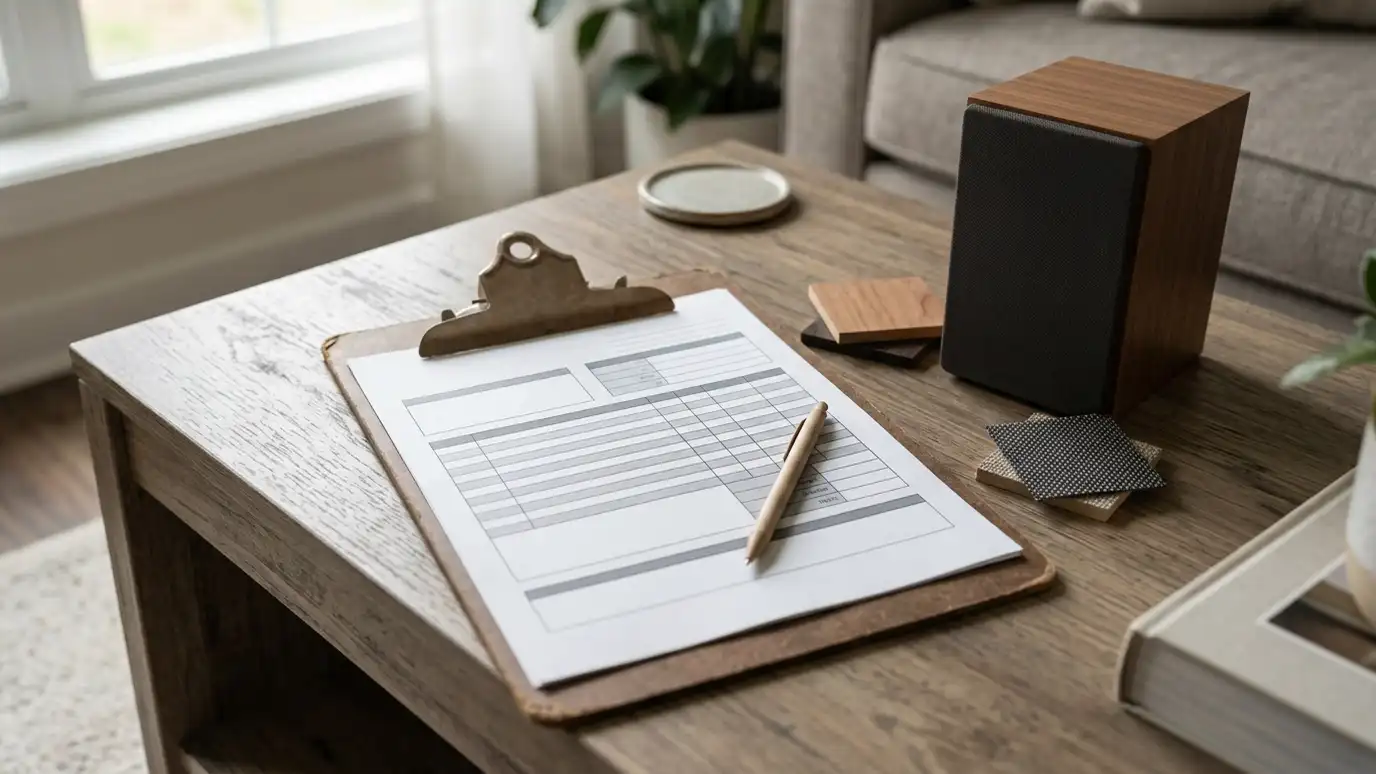
The estimate turns what you discussed into a written scope: the equipment, the wiring, the programming, the installation steps and the schedule. A good scope names models and quantities so that it can be compared with other bids.
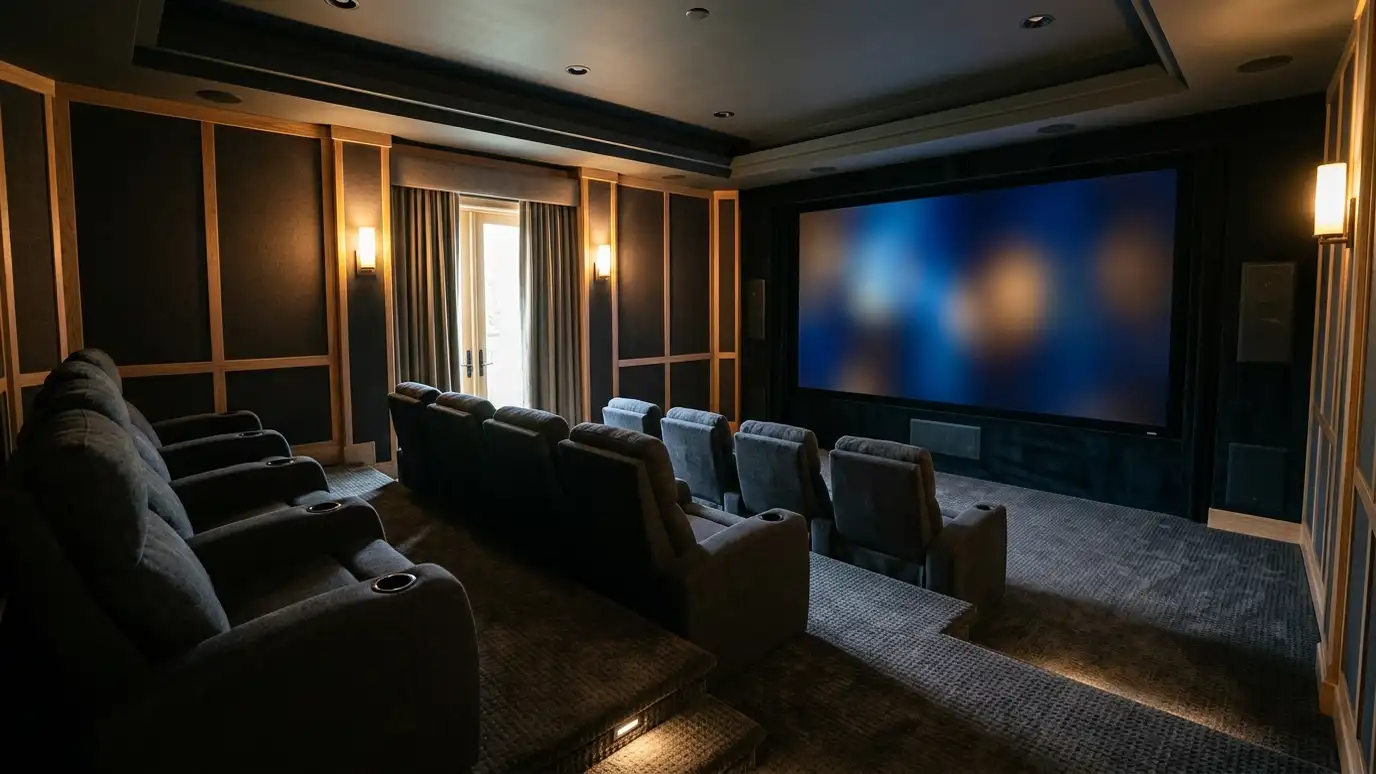
Design also includes choices. Screen size, speaker types, seating positions, control methods and finishes all depend on your room and your taste.
Take your time. You decide, and nothing should be ordered until you approve.
Decisions go faster when you see real examples. Ask to see speaker samples, mount types or screen swatches during the estimate, and take a little time to think before you approve the scope.
Prewire and preparation
When walls are open, prewire is the best time to run cables, conduit and supports. In finished homes, preparation means planning clean routes and protecting floors and furniture.
The installer confirms the plan with you, with your builder or electrician if they are involved and with anyone who needs to move furniture or open access.
Preparation takes time and pays back on installation day.
Ask who will handle the wiring and the electrical work. If your builder or electrician is involved, a short call among all of you before work starts prevents surprises on the day.
Installation day
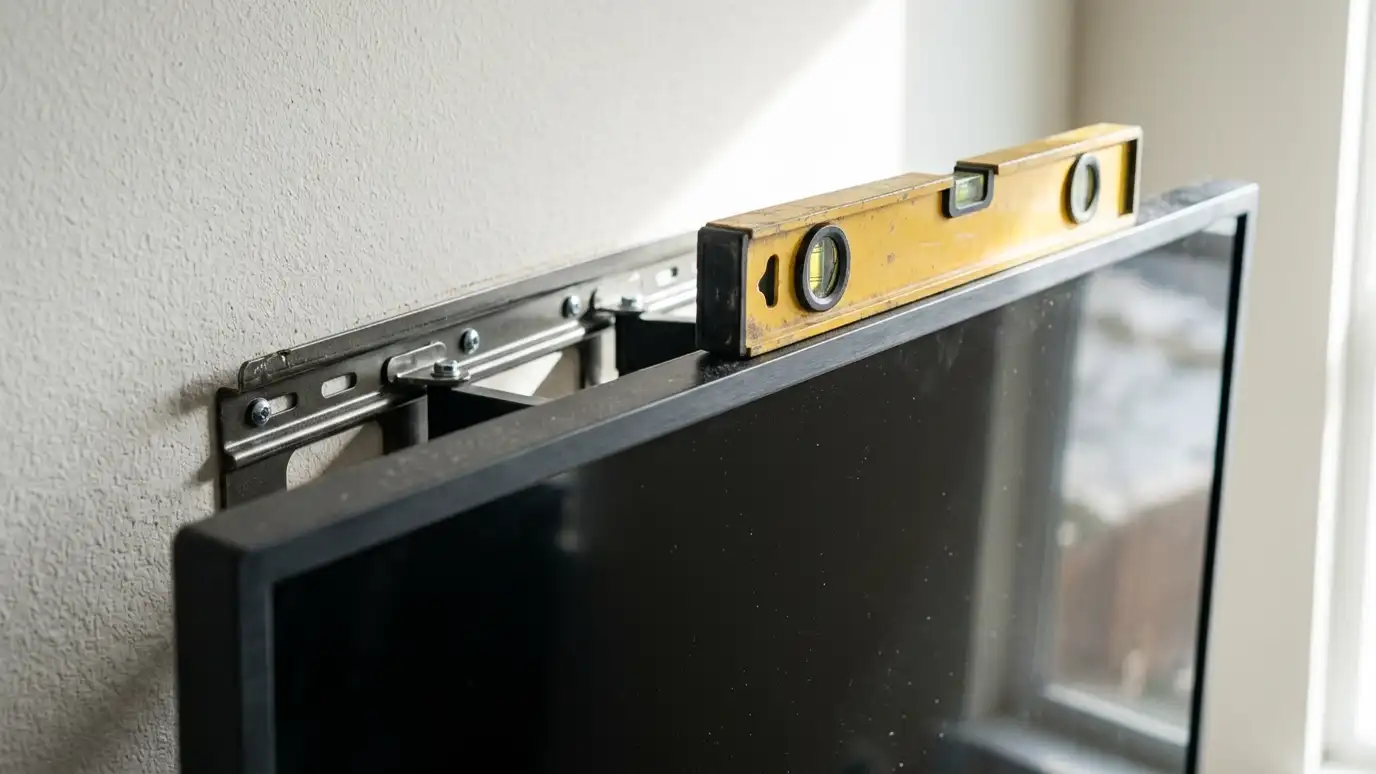
On the day, the team protects floors, mounts displays and speakers, runs and connects cables and sets up equipment. They label cables and put gear in a ventilated place.
Larger projects may take several days, with different steps at different times. A good installer keeps you informed about what is happening and what is next.
Expect some noise and dust from cutting and drilling, and a clean-up at the end.
Plan to keep pets and children out of the work area, and move fragile items before the crew arrives. A clear path to the walls and the equipment location makes installation faster and safer.
Programming and calibration
After the hardware is in, the system is programmed and tuned. Remotes and apps are set up, scenes are created and speakers and picture are calibrated for the room.
This step is what turns a pile of equipment into a system that is easy to use. Do not rush it.
Ask the installer to save the settings and to explain how to restore them if something changes.
Programming rarely happens in a single minute. Expect a short time for the installer to test scenes, adjust levels and ask you to try the controls, since small changes made then are easy to do.
Walkthrough and follow-up
At the end, you should receive a walkthrough: how to turn the system on, change sources, adjust volume and use each remote or app. Everyone who uses the room should know the basics.
You should also receive notes, passwords, a wiring map when appropriate and a contact for questions.
A good company stays reachable after the project and is ready to help if anything needs a tweak.
Keep the notes, passwords and wiring map somewhere safe, and save the installer contact. When you add a device later, those records make the job faster and simpler.
Ask what happens at each step, who does it and what you need to decide, and make sure the walkthrough is part of the scope.