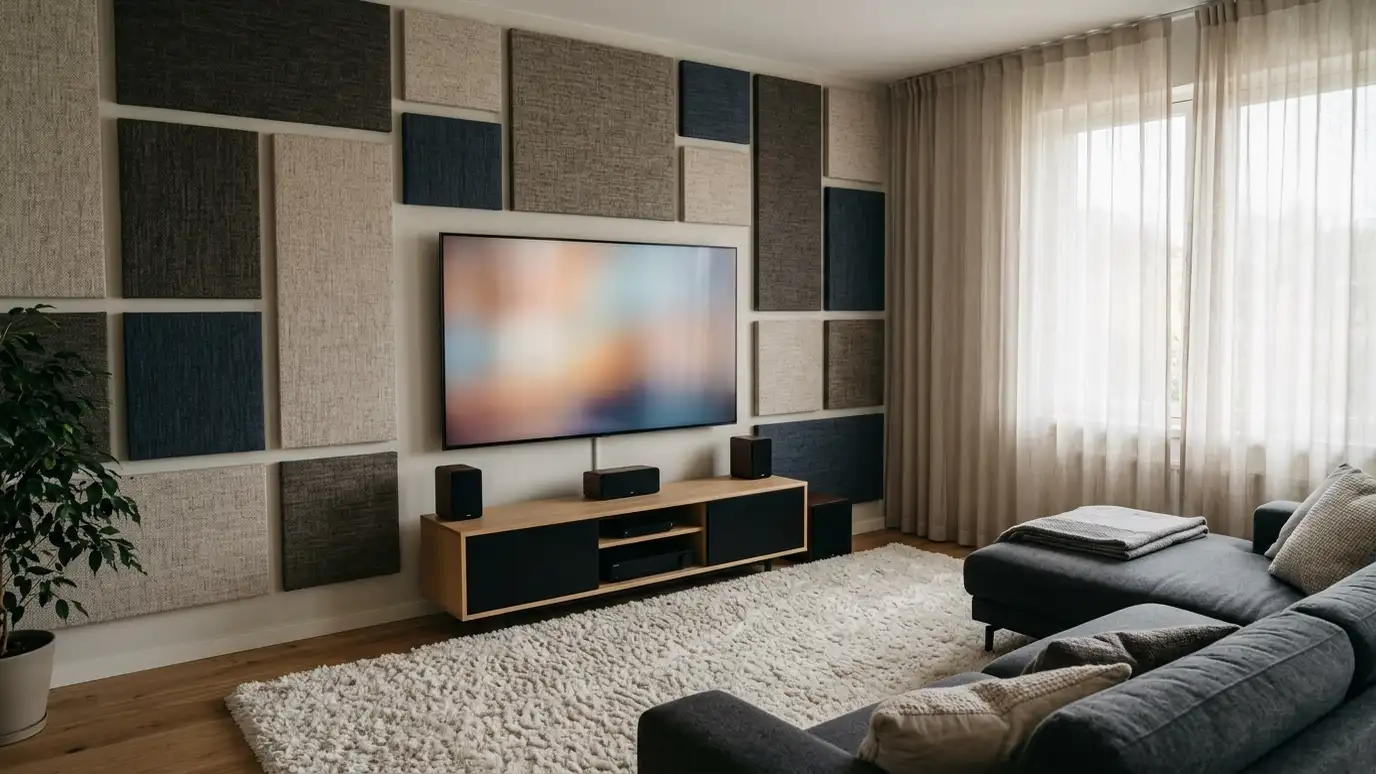
Acoustics versus soundproofing
People often mix up these two ideas. Acoustic treatment changes how a room sounds inside, by absorbing or scattering sound. Soundproofing keeps sound from moving between rooms, by adding mass, separating layers and sealing gaps.
A theater in Nashville may need both: panels to make the sound inside clear and construction details to keep the sound from shaking the house.
Knowing which problem you have saves money.
A simple test is to clap once and listen. A long ring that dies slowly means the room is live and could use absorption, and a quick, dull sound means it may already be well treated.
What makes a room sound bad
Hard surfaces bounce sound around until it blurs. Bare walls, hardwood floors and big windows make echo. Corners build up bass until it is boomy. Parallel walls create flutter echoes.
The result is dialogue that is hard to understand and music that sounds harsh or muddy.
You can often hear the problem by clapping once in the room.
Walk around the room while a steady tone plays, or listen to a bass-heavy track. If bass is strong in one spot and weak in another, placement and bass trapping are likely to help.
Absorption and diffusion
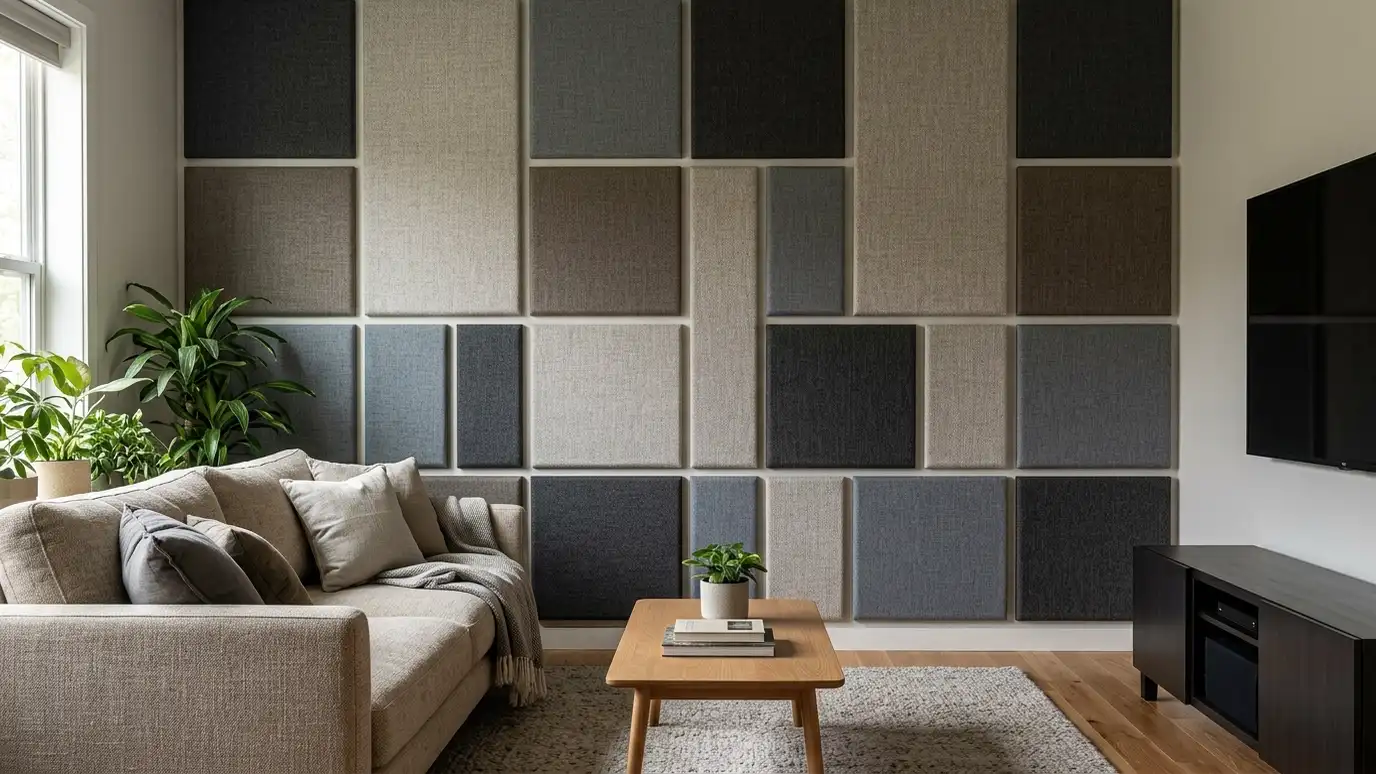
Absorbers, such as fabric-wrapped panels, soak up reflections. Diffusers scatter sound so it does not feel dead. Bass traps absorb low frequencies in corners.
Most rooms benefit from some of each. Too much absorption makes a room feel flat, and too little leaves it live and loud.
Place panels at first reflection points and corners, and start with a few before adding more.
Start with a few panels at the first reflection points on the side walls and at the front, then listen again. Adding in small steps keeps the room from becoming too dead.
Bass control
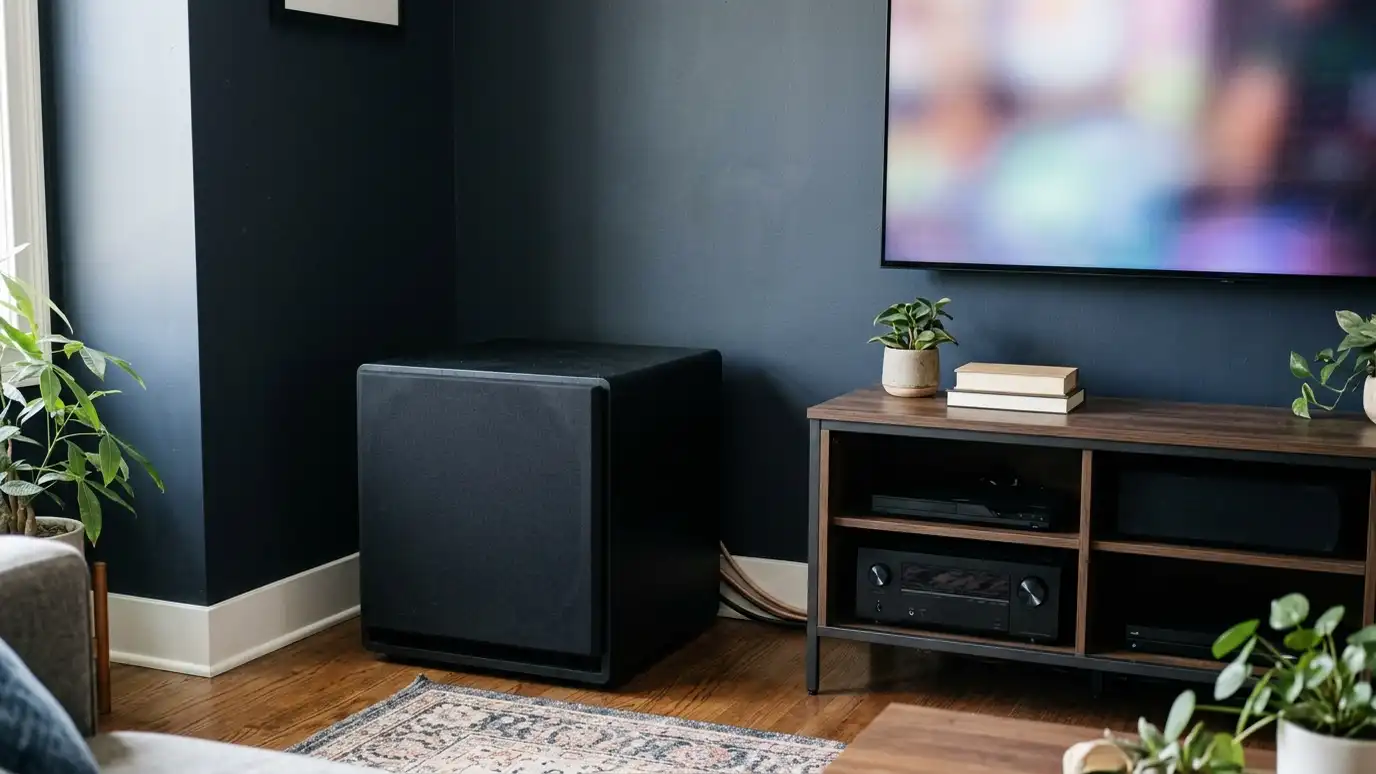
Bass is the hardest part. Every room has spots where bass is strong and spots where it nearly vanishes. Subwoofer placement, a second subwoofer and room correction can help.
Thick bass traps in corners and behind the seats help too.
Measuring the room shows what is happening. We use a microphone and software to guide decisions.
If you live near neighbors or upstairs bedrooms, mention it early. We can tune the system and the room with isolation in mind, so late movie nights stay comfortable for everyone.
Keeping sound in
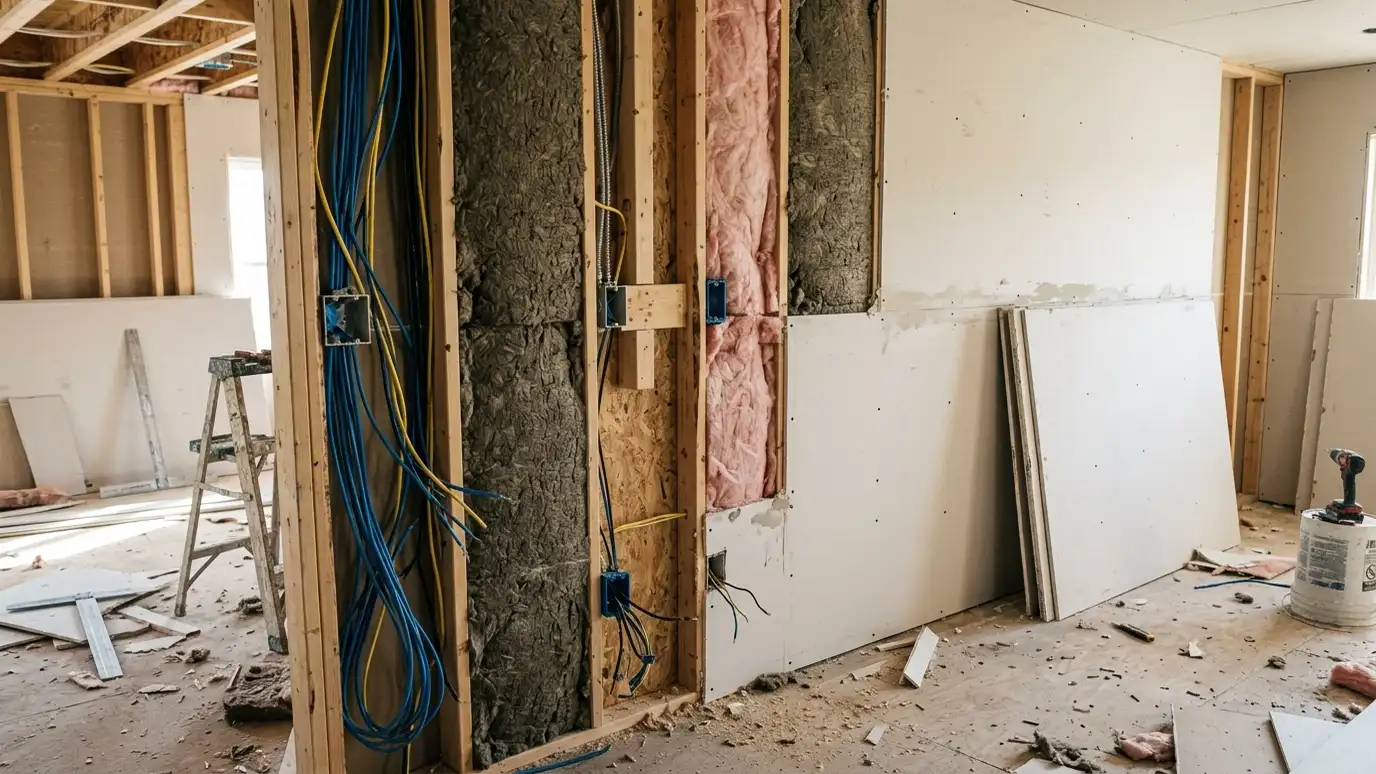
Sound escapes through gaps, thin walls, ducts and doors. Sealing gaps, adding extra drywall layers, using damping compound and installing a solid door improve isolation.
Floors and ceilings matter in basements and upstairs rooms. Isolation clips and insulation can help.
No solution blocks all low frequency sound, but good design reduces it a lot.
Walls with outlets, ducts and doors are the weak links. A little attention to those, such as putty pads behind outlet boxes and seals around the door, goes a long way.
Plan with the build
Soundproofing is easiest when walls are open. Plan wall layers, door seals and duct routing at the framing stage with your builder.
In finished rooms, options are more limited, but panels, rugs, curtains and door seals can still make a real difference.
Ask an installer to review the room before you buy materials.
Ask a professional to listen in the room before you buy treatment. A short visit often saves money by pointing to the few spots that matter.
Treat the room for sound inside it, seal and add mass for sound leaving it and plan both while the walls are open.